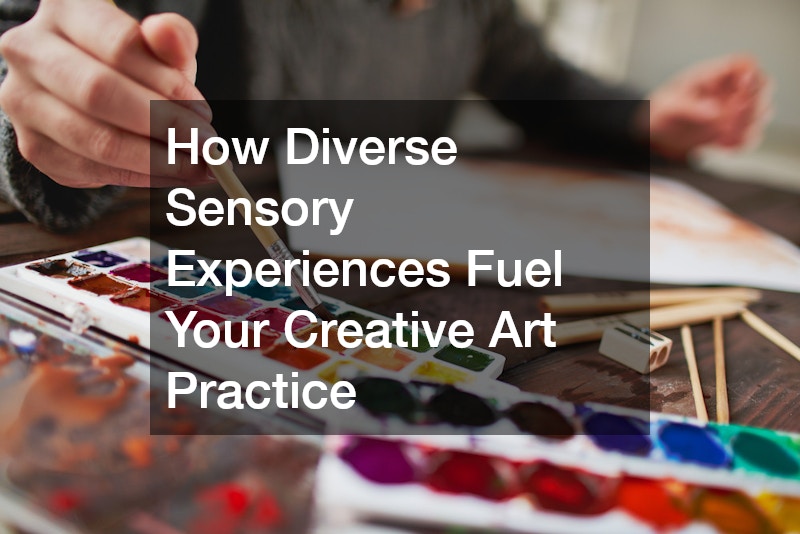
This guide explores how to break the boundaries of the traditional studio. By engaging with specialized trades, maintaining your physical health, and optimizing your environment, you create a feedback loop that feeds your subconscious. When we diversify our sensory experiences, we aren’t just “staying busy”—we are providing our brains with the raw data required to innovate.
Optimizing Mental Performance for High-Level Creativity

The bedrock of any artistic endeavor is the mind. We often talk about “talent,” but we rarely discuss the biological hardware required to execute that talent. Maintaining high levels of cognitive functioning is essential for the complex problem-solving that art requires—deciding how to balance a composition, how to mix a specific elusive secondary hue, or how to translate a 3D emotion into a 2D plane. When we challenge our brains with new logic puzzles, diverse reading, or unfamiliar physical tasks, we encourage neuroplasticity, which keeps our artistic “eye” from becoming stagnant or formulaic.
One of the most effective ways to reset this mental hardware is to step back into a state of pure play. As children, we often attended a summer day camp where the goal was exploration rather than perfection. As adults, we tend to lose that “beginner’s mind.” By intentionally seeking out workshops or environments that mirror that sense of discovery, we strip away the ego that often causes creative blocks. When the pressure to produce a “masterpiece” is removed, the brain is free to make the wild, unexpected connections that lead to true stylistic breakthroughs.
-
Logic and Art: Use puzzles or strategy games to sharpen the analytical side of your brain.
-
The Power of Play: Dedicate one day a month to “bad art”—projects where the goal is simply to experiment with no intent to sell or show.
-
Active Rest: Understand that sleep and meditation are not “time off,” but essential processing time for creative data.
Technical Precision as a Metaphor for Visual Harmony
Artistry is a physical discipline that requires extreme fine motor control. We can look to other high-precision trades to understand the value of incremental adjustments. Consider the world of piano tuning. A technician in this field isn’t just turning pins; they are listening for the “beats” of frequency, moving in fractions of a millimeter to bring a chaotic sound into perfect alignment. This level of auditory and manual discipline is a perfect metaphor for the artist’s journey. When we learn to “tune” our paintings or sculptures with that same level of microscopic attention, our work gains a professional resonance that viewers can feel, even if they can’t define it.
Because our hands are the literal bridge between our imagination and our medium, they require specialized care. It might seem indulgent, but a regular manicure is a practical act of tool maintenance. For a painter or sculptor, hangnails, dry skin, or poorly maintained nails can be a physical distraction or even a hindrance to fine work. Furthermore, the ritual of hand care forces a period of forced stillness. This tactile reset allows you to return to the studio with a heightened awareness of your most vital instruments, ensuring that your manual dexterity is never the bottleneck in your creative process.
-
Micro-Adjustments: Learn to appreciate the final 5% of a project where the most important “tuning” happens.
-
Hand Health: Use high-quality barrier creams to protect your skin from solvents and clay dust.
-
Sensory Silence: Spend time in total silence to recalibrate your ears and eyes after a long day of high-stimulus work.
Foundations of the Workspace and Physical Longevity
The floor of your studio is the literal foundation of your work. If you are standing on cold, hard concrete for eight hours a day, your focus will eventually shift from your canvas to your aching lower back. Upgrading your flooring to something with a bit of “give”—like cork, rubberized mats, or even high-quality wood—can significantly extend your working hours and improve your mood. The visual aesthetic of the floor also sets the tone; a clean, professional-looking surface invites a higher level of professional output.
For artists who deal with large-scale projects, noise, or hazardous materials, the standard spare bedroom in a house is rarely sufficient. This is where the concept of a custom garage conversion becomes invaluable. By transforming an external structure into a dedicated workspace, you gain the freedom to be loud, messy, and expansive. These spaces allow for better ventilation, higher ceilings, and the ability to move heavy materials in and out with ease. It creates a psychological boundary: when you step into that dedicated space, your brain knows it is time for serious, uninhibited labor.
-
Lighting and Surface: Choose floor colors that don’t bounce unwanted tints onto your canvas.
-
Zonal Thinking: Divide your studio into “wet” and “clean” zones to protect finished works.
-
Atmospheric Control: Invest in high-quality air filtration to keep your lungs as healthy as your hands.
Finding Creative Depth in History and Sourcing
An artist who only looks at new things is missing out on the rich textures of the past. There is a specific kind of inspiration that can only be found in the weathered and the worn. When you buy used clothing, you are essentially shopping for a library of textures and patterns. The way a vintage silk scarf has frayed or the way heavy denim has faded over decades provides a realistic reference for light and wear that a computer-generated image can never match. These items can be used for reference, for mixed-media collage, or even as high-end studio wear that inspires a specific “character” while you work.
This appreciation for the “life” of an object leads naturally into the study of art restorations. There is no greater education for a painter than seeing a masterpiece being cleaned. Understanding how the layers of paint interact with the varnish, and how those layers change over three hundred years, gives you a “X-ray” view of your own work. It teaches you about the chemistry of your materials and the importance of archival techniques. By studying the mistakes and successes of the past, you ensure that your work has the structural integrity to last for generations.
-
Texture Libraries: Keep a box of fabric scraps, old wood, and weathered metal to use as tactile references.
-
Archival Integrity: Always use the best primers and binders you can afford to prevent future decay.
-
Historical Color Palettes: Look at old textiles and restored paintings to find color combinations that have stood the test of time.
Scaling Your Production Through Bulk Sourcing
As your practice matures, you will likely find that the small jars of medium from the local art store are no longer sufficient for your vision. To grow, you must learn to think like a manufacturer. When you buy wholesale ingredients—such as raw pigments, bulk resins, or industrial-size rolls of canvas—you remove the “preciousness” of your materials. When the cost of your supplies is lower, you are more willing to take risks. You can afford to “waste” paint on a bold experiment that might lead to your next great series.
This industrial approach to art allows you to customize your mediums. Instead of relying on a pre-mixed “student grade” paint, you can mix your own to the exact consistency and pigment load you desire. This level of control is what separates a professional’s work from an amateur’s. It allows for a consistency in your “signature” texture that becomes recognizable to collectors and galleries.
-
Chemical Literacy: Learn the basics of what makes up your paints and glazes.
-
Storage Solutions: Organize bulk materials in airtight, labeled containers to prevent waste.
-
Supplier Relationships: Build connections with wholesalers to get the best prices and early access to new materials.
Organic Harmony and Botanical Inspiration
While geometry and industrial design provide one kind of inspiration, the natural world provides another. A visit to a local florist is essentially a trip to a color theory laboratory. Flowers offer examples of perfect natural gradients, complex architectural structures, and “clashing” colors that somehow work in harmony. By bringing fresh botanicals into the studio, you can study the way light passes through a translucent petal or the way a stem supports the weight of a heavy bloom. This organic input prevents your work from feeling too “sterile” or “digital.”
Nature is also the ultimate teacher of the “ephemeral.” Seeing a beautiful bouquet wilt over a week reminds the artist that beauty is often fleeting, and that our job is to capture a specific moment in time. This sense of urgency can translate into more energetic, gestural marks in your work, as you try to pin down an emotion or a visual phenomenon before it shifts.
Refined Observation and the Art of Looking
A significant portion of an artist’s job occurs when they aren’t even touching a brush. It is the act of looking—really looking—at the world. When you are in a museum or a historic site, pay attention to the art restorations taking place. These professionals are the surgeons of the art world. Their ability to match a 400-year-old pigment or stabilize a crumbling substrate is a testament to the fact that art is as much a science as it is an emotional expression. Taking notes on their techniques can help you avoid common structural pitfalls in your own work.
Furthermore, consider the invisible arts. The act of piano tuning is a reminder that beauty often relies on a rigid, underlying structure. Just as a piano must be tuned to a specific mathematical standard to sound “right,” a painting often relies on the Golden Ratio or other geometric underpinnings to feel balanced. By appreciating these hidden structures in other disciplines, you become more adept at layering them into your own visual compositions.
Cultivating the Physical Body for Creative Stamina
Art is a physical act of endurance. Whether you are leaning over a jeweler’s bench or standing at a ten-foot canvas, your body is your primary vessel. If your brain is experiencing fog or your cognitive functioning is dipping due to physical neglect, the art will suffer. Integrating physical movement into your routine is not a distraction from the work; it is a prerequisite for it. Think of the boundless energy at a children’s day camp—that spirit is fueled by constant movement and variety.
As an adult artist, you must curate your physical experiences to avoid repetitive strain. This includes everything from ergonomic flooring choices that save your knees to regular breaks where you engage with the natural beauty of a florist’s shop to refresh your visual palate. When you treat your body like a high-performance machine, your creative output becomes more consistent and sustainable.
The Materiality of the Artistic Lifestyle
The clothes you wear and the materials you use define your daily tactile experience. Choosing to buy used clothing is a creative act in itself. It allows you to explore textures like boiled wool, distressed leather, or vintage linen—materials that have a “soul” and a history. These textures can become the basis for new series of works, as you try to replicate the specific way light catches a frayed hem or the way a certain weave creates a rhythmic pattern.
At the same time, the transition to a professional mindset requires you to buy wholesale ingredients for your craft. This move into bulk sourcing changes your psychological relationship with your work. You are no longer “dabbling” with expensive, tiny portions; you are managing a production. This shift in scale often leads to a shift in ambition, allowing you to create larger, more impactful works that can fill a gallery or a public space.
Building an Environment for Breakthroughs

Finally, the space you inhabit must be a reflection of your creative goals. A custom garage or a dedicated studio space is more than just four walls; it is a physical manifestation of your commitment to your craft. Within these walls, you have the power to control every sensory input. You can choose a manicure for a moment of quiet tactile reflection, or you can blast music while working on a gritty, large-scale piece. You have the authority to decide which influences are allowed in and which are filtered out.
By treating your life as a multisensory experiment, you ensure that you are never truly “uninspired.” The world is full of technical brilliance, natural beauty, and historical depth—all of which are waiting to be processed through your unique artistic lens.
Expanding your creative practice is a lifelong commitment to curiosity. By intentionally seeking out diverse sensory experiences—from the technical rigors of industrial maintenance to the ephemeral beauty of the natural world—you build a reservoir of inspiration that will never run dry. Your art is the sum of everything you see, touch, and hear. When you invest in your environment, your health, and your mental agility, you aren’t just making “better” art; you are building a more vibrant, meaningful life. Keep your eyes open, your hands ready, and your studio foundations solid, and the work will follow naturally.